
Expert A-Level Tutors
Achieve outstanding results in your A-Level exams with our hand-selected qualified teachers and tutors from top UK universities. All tuition is personalised exam board and learning style.

What Will Your Tutor Teach You?
Our tutors are experienced across all major A-Levels exam boards and will tailor sessions to your specific syllabus.
Comprehensive syllabus coverage tailored to your exam board
Past paper practice with detailed feedback
Exam technique coaching for maximum marks
Regular progress assessments and parent updates
Targeted revision plans ahead of exams
A-Level Exam Board Coverage
Our tutors are experienced across all major A-Level exam boards.
AQA
OCR
CIE
Edexcel
WJEC
IB
Why choose us for your child’s A-Level success?

Experienced Teachers & Top University Graduates
Our GCSE tutors have teaching backgrounds and come from top universities such as Oxbridge and Russell Group.

Proven Track Record
97% of our sudents achieve a grade improvement within the first term.

Exam Board Expertise
Comprehensive coverage of AQA, Edexcel, OCR, and other major exam boards.

Personalised Approach
Every learning plan is tailored to your child's strengths, weaknesses, and goals.

DBS Checked & Vetted
All tutors undergo thorough background checks and reference verification.

Flexible Scheduling
Sessions fit around your child's school timetable with convenient online delivery.
Don’t just take our word for it…
5 Tips for Working with Your Tutor
01
Set clear goals with your tutor from the first session — knowing what you want to achieve helps your tutor tailor every lesson.
02
Complete any assigned practice or homework between sessions — consistent effort outside lessons accelerates progress.
03
Be open about what you find difficult — your tutor is there to help, not judge. Honest communication leads to better support.
04
Use your tutor's exam technique advice — they know the mark schemes inside out and can help you pick up easy marks.
05
Stay in regular contact via WhatsApp — our team monitors progress and can make adjustments at any time.
Which A-Level subject are you interested in support?
Core Subjects
Humanitarian Subjects
A-Level English Literature
We focus on critical reading, structured argument development, and high-level vocabulary application. Students receive guidance on how to analyse themes, character development, and literary devices effectively.
Literary Theory: A student applies lens-based analysis—such as Marxism, Feminism, or Post-colonialism—to deconstruct how power and identity are represented in texts.
Comparative Scholarship: They move beyond comparing two poems to comparing entire genres, such as the evolution of "The Gothic" or "Dystopian Fiction."
Independent Study (NEA): A student undertakes a personal research project, selecting their own texts to compare and developing a 2,500-word academic dissertation.
Critical Debate: They learn to engage with "Criticism," referencing the views of established literary scholars to support or challenge their own interpretations.
A-Level English Language
This is "English as a Science." A student analyzes how language is used as a tool for social control and how it has evolved from the 1600s to the digital age.
Language Diversity: A student investigates how gender, occupation, and social class affect the way people speak, studying theories like Labov’s sociolinguistic research.
Language Change: They trace the history of English, analyzing how "text speak," global "Estuary English," and political correctness are currently reshaping the dictionary.
Child Language Acquisition: A student explores how children learn to speak and write, debating whether language is an innate biological trait or a learned social behavior.
Language in Action: They practice "Style Modeling," where they deconstruct a professional writer’s style and then replicate it to produce their own high-level journalism or fiction.
A-Level Maths
A-Level Maths introduces Calculus, the mathematical study of change, which is the foundation for engineering, physics, and economics.
Pure Mathematics: A student delves into advanced algebra, trigonometry, and the core principles of Differentiation and Integration to solve problems involving rates of change.
Mechanics: They apply math to the physical world, calculating the forces on a bridge, the trajectory of a projectile, and the friction of a moving car using Newton’s Laws.
Statistics: A student masters the "Large Data Set," using probability distributions and hypothesis testing to determine if a result is "statistically significant" or just a coincidence.
Proof & Logic: They move toward formal mathematical proof, learning to provide rigorous, step-by-step logical justifications for complex theorems.
A-Level Physics
Physics at this level requires a student to apply high-level mathematical modeling to physical phenomena. They move beyond classical mechanics into the "counter-intuitive" worlds of quantum theory and field physics.
Further Mechanics & Thermal Physics: A student applies calculus-based logic to circular motion and oscillations, while also investigating the kinetic theory of gases and the laws of thermodynamics.
Fields & Their Consequences: They explore the invisible forces that shape our world, comparing Gravitational, Electric, and Magnetic fields and their applications in satellite technology and particle accelerators.
Nuclear & Particle Physics: A student deconstructs the atom itself, studying quarks, leptons, and the fundamental particles that make up the "Standard Model," alongside the mechanics of nuclear decay.
Astrophysics & Cosmology: They investigate the life cycles of stars, the evidence for the Big Bang, and the use of telescopes and "Doppler shifts" to measure the expansion of the universe.
A-Level Biology
A student moves from general observations to a molecular understanding of how organisms function. They develop the laboratory skills required for medical and biological research, focusing on the intricate chemical pathways that sustain life.
Biological Molecules & Biochemistry: A student explores the structure and function of proteins, lipids, and carbohydrates, investigating how enzymes act as biological catalysts at a microscopic level.
Genetics, Populations & Evolution: They delve into the "code of life," studying DNA technology, gene expression, and how natural selection drives the evolution of species within changing environments.
Energy Transfers: A student investigates the complex biochemical pathways of Photosynthesis and Respiration, learning to calculate the efficiency of energy transfer within cells and ecosystems.
Control Systems: They analyse how organisms respond to their internal and external environments, exploring the nervous system, muscle contraction, and the role of Homeostasis in maintaining life.
A-Level Chemistry
A student of A-Level Chemistry transitions into the world of "Reaction Mechanisms." They learn to predict the behavior of molecules with mathematical precision and develop a forensic approach to identifying unknown substances.
Physical Chemistry: A student masters the laws of thermodynamics, studying Enthalpy, Entropy, and Gibbs Free Energy to determine whether chemical reactions can occur spontaneously.
Inorganic Chemistry: They investigate the trends of the Periodic Table in greater depth, focusing on Transition Metals and their unique ability to form complex ions and act as catalysts.
Organic Chemistry: A student learns to navigate the vast world of carbon-based compounds, mastering "curly arrow" mechanisms to show exactly how electrons move during a reaction to create new molecules.
Analytical Techniques: They develop the skills to use advanced technology, such as Mass Spectrometry and Infrared Spectroscopy, to deduce the exact molecular structure of unidentified compounds.
A-Level Business Studies
A student moves beyond the "how-to" of starting a business and begins to act as a strategic consultant. They learn to use data-driven models to justify multi-million pound decisions and manage the risks of international expansion.
Strategic Position & Direction: A student learns to evaluate a firm’s current standing using tools like SWOT and PESTLE analysis, then determines growth strategies through models like Ansoff’s Matrix or Porter’s Strategic Matrix.
Financial Analysis & Investment Appraisal: They move into advanced corporate finance, learning to calculate Net Present Value (NPV) and Internal Rate of Return (IRR) to decide if a long-term project is worth the financial risk.
Managing Strategic Change: A student investigates how large organizations pivot in response to crisis or technological shifts, studying leadership styles and the "culture" of a business as a driver for success or failure.
The Global Perspective: They analyze the impact of multinationals on the global economy, exploring how businesses navigate differing international laws, ethical dilemmas, and the pressures of "Glocalization."
A-Level Economics
In A-Level Economics, a student transitions from simple supply and demand to "Economic Modeling." They investigate why markets fail, how human psychology defies logic, and how governments attempt to steer the massive ship of the national economy.
Microeconomic Modeling: A student explores the nuances of market structures—from Perfect Competition to Monopolies—and uses complex diagrams to show how "externalities" like pollution or healthcare costs lead to market failure.
Macroeconomic Strategy: They evaluate the tools a country uses to fight inflation and recession, analyzing the effectiveness of Quantitative Easing, interest rate adjustments, and supply-side policies in a modern, post-pandemic context.
The Global Financial System: A student investigates the role of central banks and the risks of the banking sector, learning how global trade imbalances and exchange rate fluctuations affect the "purchasing power" of the everyday citizen.
Behavioral Economics: They move into the "Human" side of the subject, studying why people often make irrational financial decisions and how governments use "Nudge Theory" to influence public behaviour.
A-Level Politics
A student of Politics moves beyond "current affairs" to understand the structural architecture of government. They learn to evaluate the effectiveness of democracy and the ideologies that drive political decision-making.
UK Government & Politics: A student performs a forensic analysis of the British system, investigating the "elective dictatorship" of the Prime Minister, the role of the Supreme Court, and whether the Westminster model is still fit for the 21st century.
Political Ideologies: They dive deep into the "Big Three"—Liberalism, Conservatism, and Socialism—plus a fourth elective such as Feminism or Anarchism, learning the core tensions between different thinkers within each movement.
Comparative Politics (US Focus): Students often compare the UK system with the US Government, analyzing the power of the President versus the Prime Minister and the differences between the US Bill of Rights and the UK’s uncodified constitution.
Global Politics: A student investigates the "New World Order," exploring the role of international bodies like the UN, G7, and IMF, and debating how globalization has impacted the sovereignty of the nation-state.
A-Level Computer Science
At A-Level, Computer Science transitions from basic coding to the high-level theory of "Computational Logic." A student investigates how hardware and software interact at a fundamental level, learning to build efficient, scalable solutions to complex real-world problems.
Data Structures & Algorithms: A student masters advanced ways of organizing data—such as Linked Lists, Binary Trees, Stacks, and Queues. They learn to evaluate the efficiency of algorithms using "Big O Notation," determining how speed and memory usage scale with data size.
Computer Architecture & Low-Level Code: They dive into the physical reality of computing, exploring how the Fetch-Decode-Execute cycle works at the register level and practicing "Assembly Language" to understand how software communicates directly with the CPU.
Theory of Computation: A student explores the limits of what computers can do, studying Boolean Algebra, Karnaugh Maps, and Turing Machines. They learn to simplify complex logic gates to build more efficient digital circuits.
The Programming Project (NEA): A cornerstone of the A-Level, the student acts as a software engineer to solve a real-world problem. They navigate the full "System Lifecycle"—from initial requirements and design to coding a complex solution and performing rigorous user testing.
A-Level History
A student of History moves beyond the "what" and "when" to investigate "historiography"—the study of how and why different historians interpret the same events in wildly different ways.
Breadth & Thematic Studies: A student investigates a single theme across a significant period, such as the Tudors (1485–1603) or the evolution of the British Empire, tracing how power and authority shift over centuries.
Depth Studies: They engage in a forensic analysis of a short, high-stakes period of history, such as the Russian Revolution or Weimar and Nazi Germany, examining the social, economic, and political "trigger points" for change.
Independent Investigation (NEA): A student undertakes a 4,000-word personal research project on a topic of their choice. They learn to find and interrogate primary sources, debating their "utility" and "reliability" based on contemporary context.
Analytical Synthesis: They master the art of the "Multi-Causal" argument, learning that historical events are never the result of a single factor, but a complex web of economic, ideological, and individual actions.
A-Level Geography
A-Level Geography bridges the gap between social science and physical science. A student learns to view the world as a series of interconnected systems, where a change in one area (like carbon levels) has a "butterfly effect" across the globe.
Physical Systems & Sustainability: A student investigates the Water and Carbon cycles as closed systems, learning how human intervention in the Amazon or the Arctic disrupts global climate stability.
Geopolitics & Global Governance: They explore the concept of "Superpowers," analyzing how nations like the USA and China project power through "Soft Power" (culture) and "Hard Power" (military and economics).
Landscape Systems: Students study specific environments in depth—such as Glacial or Coastal landscapes—analyzing the complex geomorphological processes that shape the earth's surface over millennia.
Independent Investigation (NEA): A student acts as a lead researcher, choosing their own geographical question, conducting four days of fieldwork, and producing a 4,000-word report based on their primary data.
A-Level Languages
A student of a Modern Foreign Language (MFL) moves beyond "school and hobbies" to discuss the heavy-hitting issues of the 21st century. They learn to think, argue, and even "feel" in a second tongue.
Social Issues & Trends: A student investigates the modern-day challenges of their target country, debating topics such as immigration, racial integration, the changing nature of the family, and the role of social media.
Political & Artistic Culture: They explore the political history and heritage of the country, looking at how movements like Francophonie, Hispanic festivals, or German reunification have shaped modern national identities.
Literary & Cinematic Analysis: A student studies a major literary work (a novel or play) and a film in the target language. They learn to write academic essays that analyze character development, symbolism, and the director's or author's intent.
Independent Research Project (IRP): For the speaking exam, a student chooses a specific area of interest—perhaps a regional conflict, an artistic movement, or a cultural tradition—to research deeply and defend in a high-level academic discussion.
Frequently Asked Questions
-
Our A-Level Maths tutoring covers the complete syllabus for all major exam boards including AQA, Edexcel, and OCR. Sessions are tailored to your child's specific needs.
-
Our tutors com from varying backgrounds depending on your preferences. At the least they are all either qualified teachers with QTS, or have come from an elite university.
-
Pricing varies depending on tutor experience and amount of tuition required. Contact us for a free consultation and personalised quote.
-
All sessions are delivered online via a secure video platform, allowing flexible scheduling and access to the best tutors regardless of location.
-
We offer a free reassignment guarantee. If the tutor isn't the right match, we'll find a new one after taking on your feedback.
Ready to Start Your Learning Journey?
Discover how Tutor Recruiter can help you or your child see success with tailored, expert tutoring. Let us match you with the perfect tutor today!
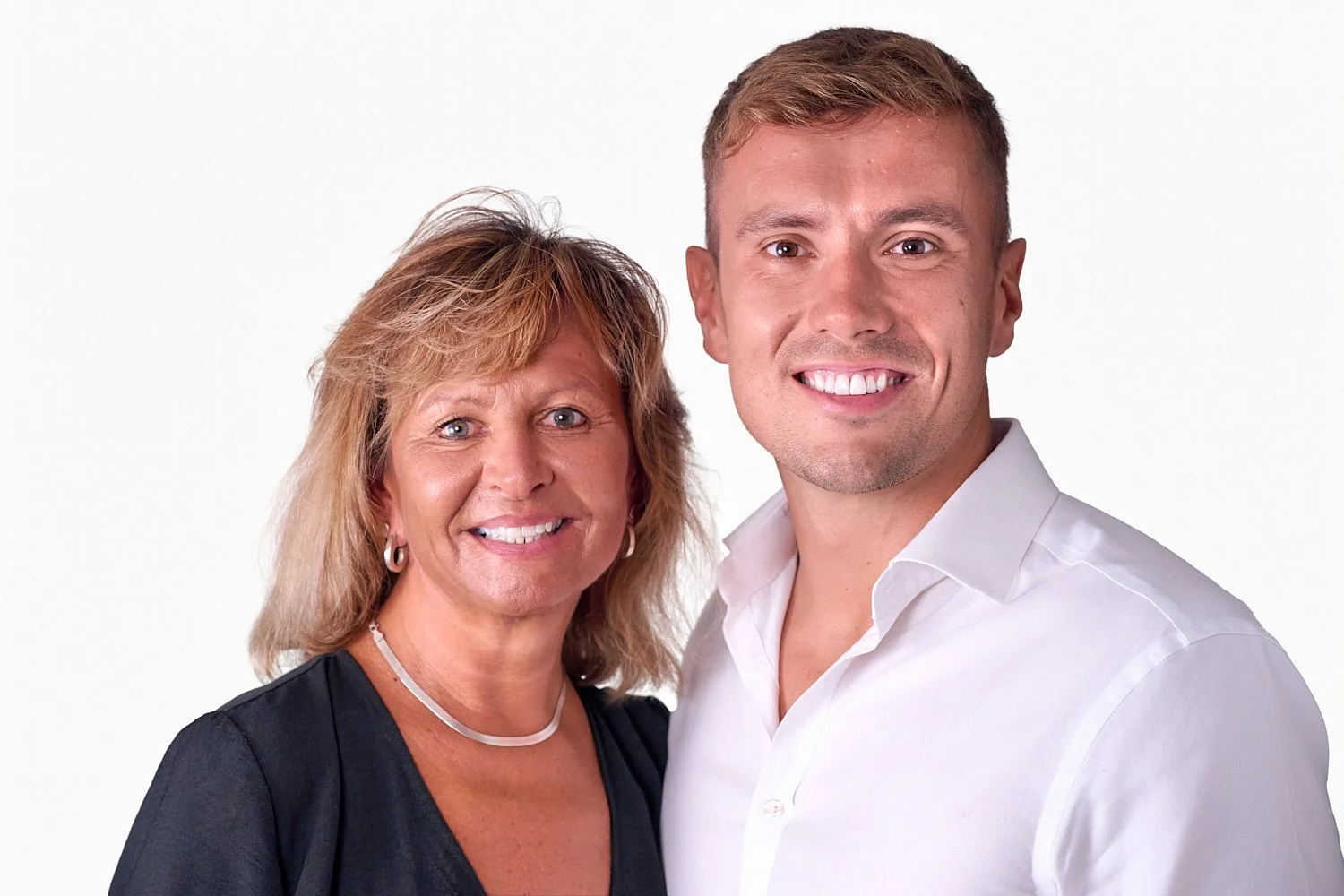
Co-Founders of Tutor Recruiter
Samantha & Harry Hastings